
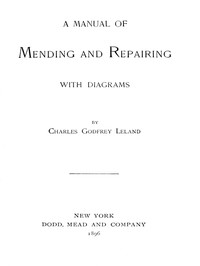
A Manual of Mending and Repairing; With Diagrams by Charles Godfrey Leland
Forget everything you think you know about old repair guides. A Manual of Mending and Repairing isn't a dusty list of instructions. It's a conversation with 1896. Charles Godfrey Leland, a fascinating character who studied folklore and gypsy culture, turns his keen eye to the everyday art of fixing things. The book walks you through repairing everything from wooden furniture and broken china to umbrellas, books, and clothing. It's packed with clear, practical diagrams showing you how to splice a broom handle, set a rivet, or re-cover a trunk.
The Story
There isn't a plot in the traditional sense. Instead, the 'story' is the journey of rediscovery. Leland systematically presents methods for mending household items, assuming the reader has basic tools and a willingness to learn. He moves from simple glue recipes and patching techniques to more complex joinery and metalwork. The narrative thread is his underlying belief: that repair is a dignified, essential skill. He writes with the urgency of someone preserving knowledge he fears is fading, guiding the reader from a state of helplessness ("It's broken, toss it!") to one of capability ("I can fix that.").
Why You Should Read It
This book charmed me because it's so much more than its title. Yes, the advice is solid (some of it still works perfectly today!). But the magic is in the philosophy between the lines. In a world of mass production, Leland champions care, resourcefulness, and a deep connection to our belongings. Reading his clear, patient explanations, you get a sense of the satisfaction and independence that came from being able to maintain your own world. It makes you question our modern habit of easy replacement. The book is a gentle, persuasive argument for slowing down, valuing quality, and finding pride in making something whole again.
Final Verdict
Perfect for DIY enthusiasts, history lovers, and anyone feeling the itch for a more hands-on, sustainable life. It's also a fantastic read for writers or creators looking to understand the material world of the past. You won't find dramatic twists, but you might find a new perspective. This manual is for the curious person who looks at a cracked vase and doesn't just see damage—they see a project, a story, and a small act of rebellion against a throwaway culture.
This is a copyright-free edition. Share knowledge freely with the world.
Karen Martin
1 month agoRead this on my tablet, looks great.
Nancy Miller
1 year agoThe index links actually work, which is rare!
Ashley Walker
10 months agoI didn't expect much, but the narrative structure is incredibly compelling. Don't hesitate to start reading.








Thomas Taylor
8 months agoI stumbled upon this title and the atmosphere created is totally immersive. Worth every second.