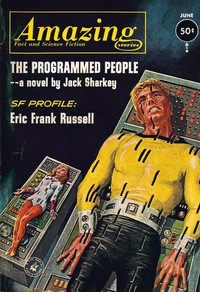
The programmed people by Jack Sharkey
Jack Sharkey's The Programmed People is a tight, paranoid sci-fi thriller from 1964 that hasn't lost its edge. It feels like a lost episode of The Twilight Zone stretched into a novel, packed with that classic '60s vibe of Cold War anxiety and wonder about the future.
The Story
The plot is a straight shot of suspense. Our protagonist, an ordinary man in what seems like an ordinary town, stumbles onto a terrifying secret. Through a series of strange events and malfunctions, he pieces together that the people around him are not people at all. They are incredibly advanced, lifelike androids, programmed to act out every detail of daily life. The horror isn't about robots attacking; it's about the utter loneliness and doubt that sets in. He becomes a detective in his own life, trying to find proof, looking for any other real human, and constantly wrestling with the worst question of all: Could I be one of them? The book races toward a confrontation with the forces behind the programming, forcing him to fight for his very identity.
Why You Should Read It
What makes this book stick with you isn't the tech (which feels charmingly dated), but the core idea. Sharkey taps into a universal fear: that you're alone in a fabricated world. Reading it, you feel that creeping dread right alongside the main character. The writing is brisk and clear, focusing on the man's panic and determination rather than getting bogged down in unnecessary details. It's a story about the essence of self. If everyone else is fake, what makes you real? Is it your memories, your emotions, or just the ability to ask the question? In our age of social media and AI, where so much of life feels curated and performed, that question hits harder than ever.
Final Verdict
The Programmed People is perfect for fans of classic, idea-driven science fiction. If you enjoy the works of Philip K. Dick (think Do Androids Dream of Electric Sheep?) or the unsettling short stories of the mid-century pulps, you'll find a lot to love here. It's also a great pick for someone who wants a thought-provoking story that you can read in a couple of sittings. Don't go in expecting hard science or modern action scenes. Go in for a clever, psychological puzzle that explores paranoia, identity, and what we cling to when our world turns out to be a lie. It's a smart, forgotten slice of sci-fi history that still has something important to say.
This work has been identified as being free of known copyright restrictions. It is available for public use and education.
Michelle Lewis
1 year agoEssential reading for students of this field.
John Hill
1 year agoRead this on my tablet, looks great.
Kimberly Harris
4 months agoHaving read this twice, the arguments are well-supported by credible references. Truly inspiring.
Matthew Anderson
1 year agoEnjoyed every page.
Emma Anderson
9 months agoSurprisingly enough, the emotional weight of the story is balanced perfectly. This story will stay with me.